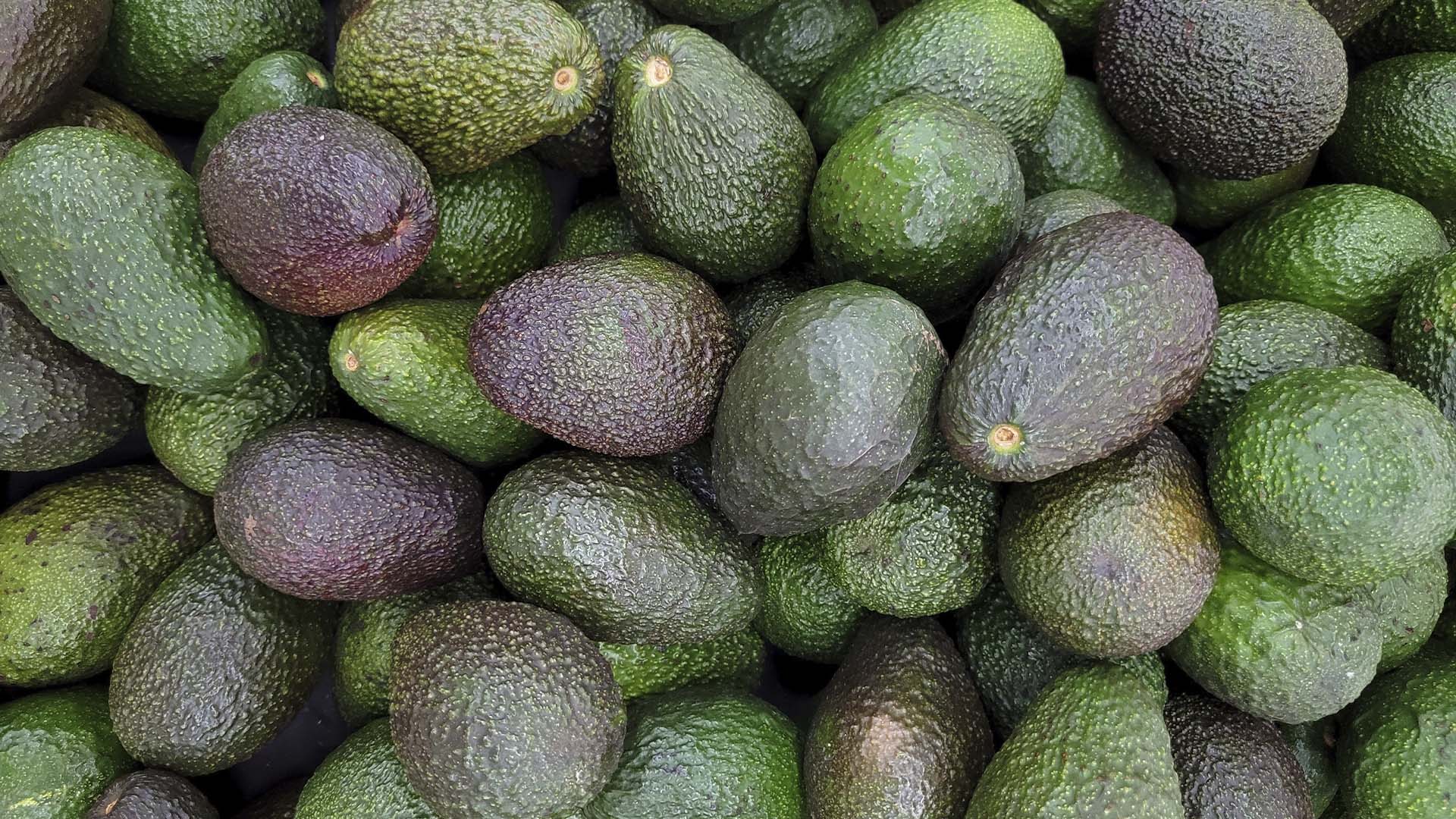
Brazil may be poised to carve out a significant role in the fast-growing global avocado market, as rising demand collides with supply constraints in the industry’s dominant producers.
The transformation of pastureland into fruit-producing areas is emerging as a potential new agricultural frontier, able to elevate Brazil from a marginal player to a meaningful exporter of high value-added crops — particularly avocados.
Global supply of the fruit remains heavily concentrated. Mexico and Peru together account for roughly 60% of avocado exports, with Israel, Spain and Kenya each contributing just over 4%. Most of these countries, however, face structural limits to expansion, including land scarcity, water constraints and climate pressures.
The scenario of tightening supplies comes as demand accelerates. Avocados are expected to surpass pineapples and become the world’s second most traded tropical fruit by 2030, trailing only bananas, according to OECD projections.
Prices have followed suit. Export values have tripled over the past 30 years, with European prices rising from about $1.50 per kilogram in 2012 to $2.40 a decade later.
For Brazil, the convergence of these trends presents a rare opportunity.
“Avocados are in high demand, and production is still concentrated in a handful of countries. Brazil has all the conditions to become highly relevant,” said Flavio Zaclis, founder of Barn Investimentos, a venture capital firm based in Sao Paulo.
Unlike many leading exporters, Brazil retains ample land and water resources, alongside favorable climatic conditions in key regions — particularly at higher altitudes, where milder temperatures support fruit cultivation.
If scaled effectively, the country could follow a trajectory similar to Peru, which went from a negligible presence in global markets to capturing nearly 20% of export share within a decade, aided by trade agreements, certification efforts and coordinated institutional support.
High-Return Crops Gain Ground
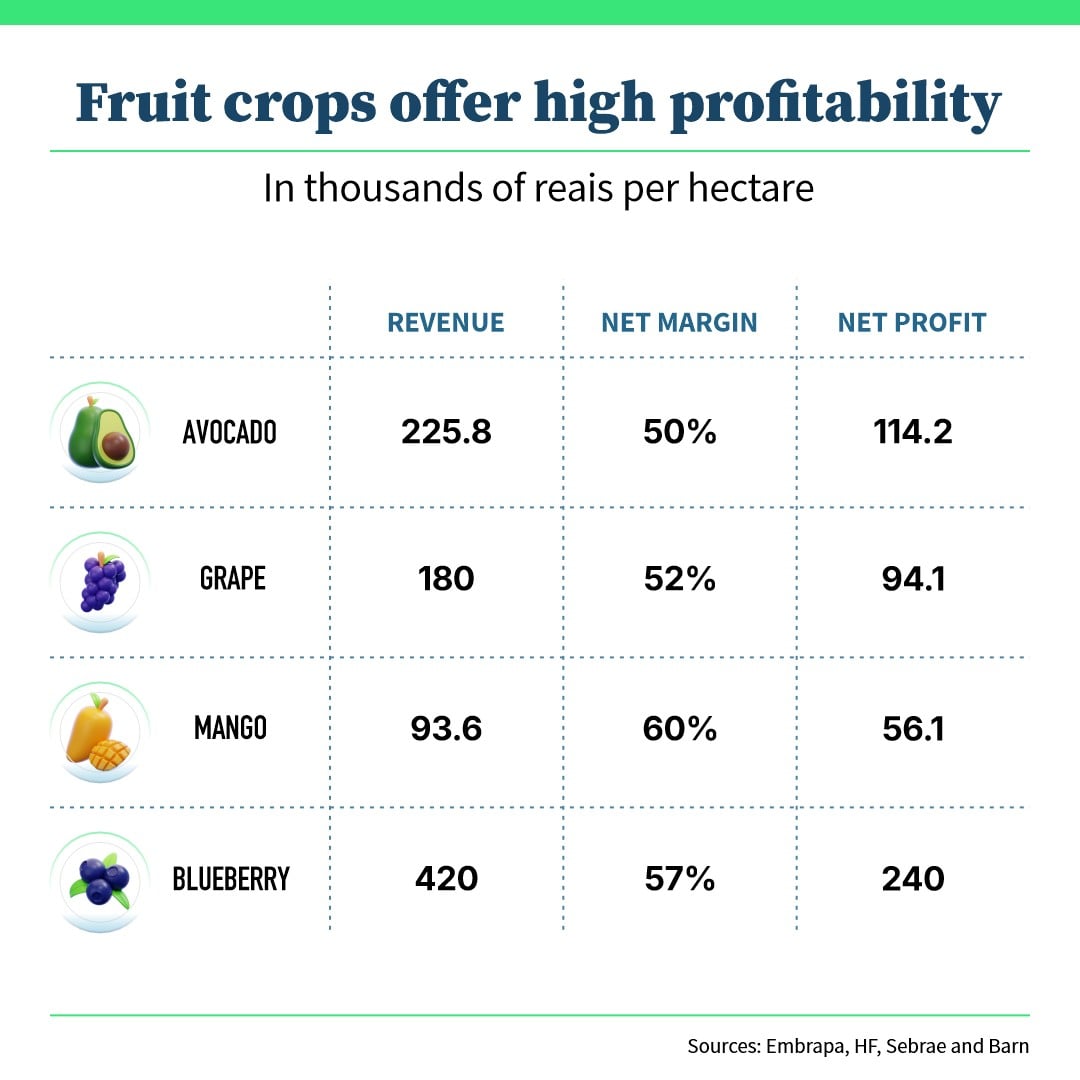
The economics underpinning the shift are compelling. Avocado farming can generate revenue of up to 225,800 reais per hectare, with net margins around 50%, far outpacing grain production, where margins typically hover just above 20% and revenue averages about 7,200 reais per hectare.
Land values reflect that disparity. In regions suited to high-value fruit crops, farmland can exceed 300,000 reais per hectare, compared with about 58,900 reais per productive hectare for large-scale grain operations such as those run by SLC Agrícola SA.
This widening profitability gap is beginning to draw investor interest — and to reshape land-use strategies.
One example is Altitude, an agricultural company launched by Barn Investimentos after nearly two years studying the opportunity. The firm has begun deploying capital into avocado production as part of a broader bet on higher-value crops.
Last month, Altitude acquired a 200-hectare farm in southern Minas Gerais, which it plans to convert from soybeans and pastures into a fully irrigated avocado operation. The project is expected to take about four years before reaching commercial production.
In the near term, the company also plans to source fruit from third-party growers to test export markets, while evaluating further land acquisitions, leases and partnerships.
Its strategy reflects a broader thesis: that Brazil’s comparative advantages — abundant land, water and suitable climate — could allow it to emerge as a key supplier in a market where growth is increasingly constrained elsewhere.
Whether the country can translate that potential into export scale will depend not only on production, but also on market access, certifications and trade policy — areas that proved decisive in Peru’s rise.
For now, the opportunity remains largely untapped.