


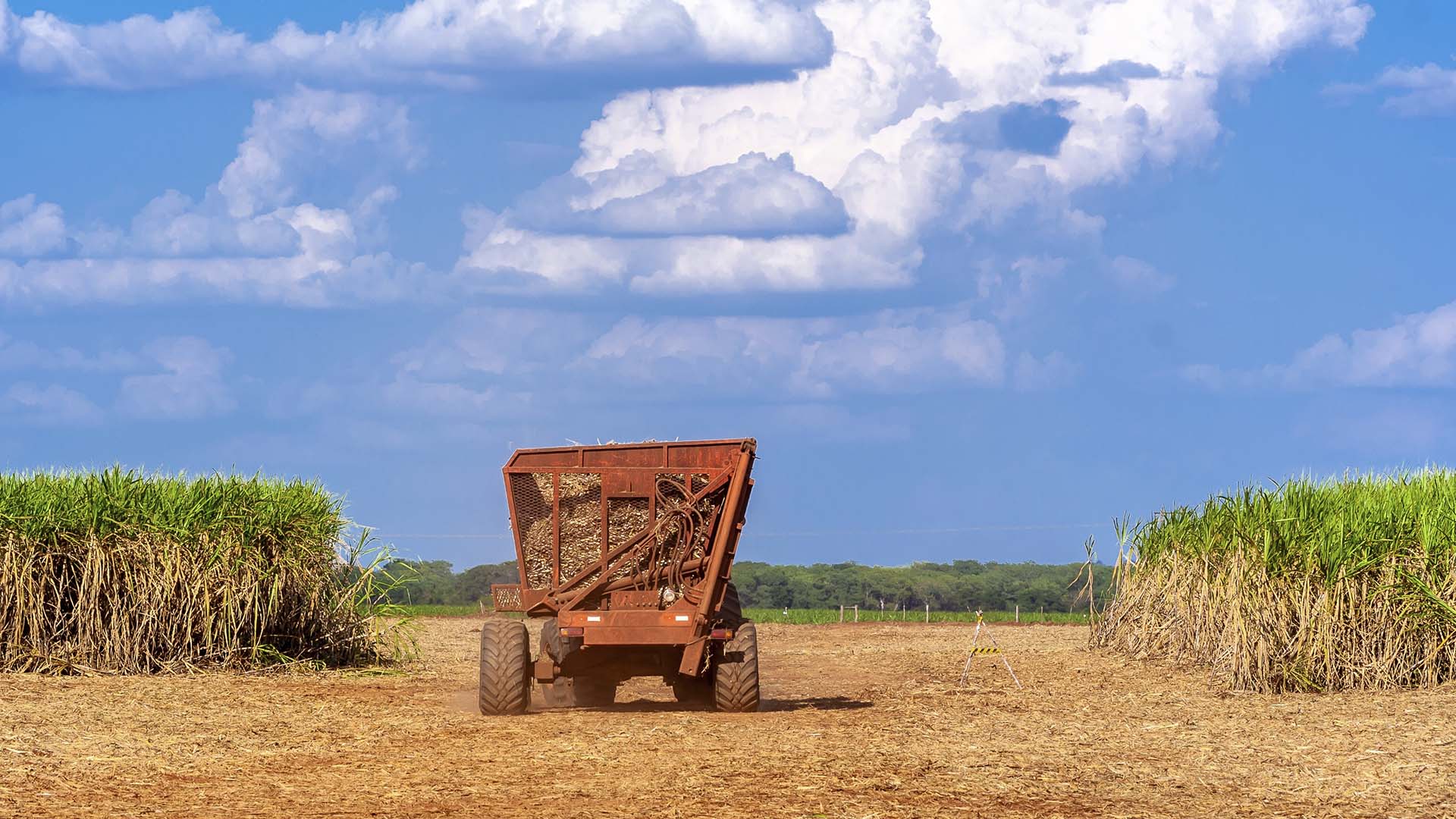

Heavy rains across Brazil’s Center-South sugar belt could leave as much as 60 million metric tons of sugarcane unharvested this season, matching a record set in 2009/10, when El Niño disrupted harvesting operations, according to Sucden, one of the world’s leading sugar traders.
The unusually large volume of cane carried over into the next season could constrain Brazilian sugar production and tighten global supplies at a time when the market is particularly vulnerable to seasonal shortages.
Jeremy Austin, managing director of Sucden Brazil, said the share of unharvested cane could approach the 9% to 10% recorded in the 2009/10 season.
“In theory, we could see a similar percentage this year. The impact remains uncertain, and it’s not straightforward,” Austin said Tuesday during a panel at the 26th Datagro International Sugar and Ethanol Conference in São Paulo.
Austin’s estimate is among the most aggressive in the market. He expects mills in the Center-South, Brazil’s main sugar-producing region, to crush between 615 million and 625 million metric tons of cane by the end of December, against an estimated crop potential of 675 million tons.
If crushing ends at the lower end of that range, about 60 million tons of cane would remain standing, equivalent to 8.9% of the available crop.
How much of that cane can eventually be processed will depend on whether mills are ready to resume crushing operations in March, Austin said.
Other market participants expect a substantially smaller carryover.
Mario de Rezende Barbosa, strategy director at Louis Dreyfus Company (LDC), and Paulo Garcia, chief executive officer of Vital Commodities, estimate that about 30 million tons will be left unharvested. Analysts at XP Investments projected 27 million tons two weeks ago.
Sucden and Vital both expect mills to crush approximately 615 million tons by December. Their disagreement centers on total cane availability and how much can be recovered during the intercrop period.
Sucden estimates the available crop at 675 million tons, compared with Vital’s 660 million tons.
Under Garcia’s scenario, 45 million tons would remain standing at year-end, but mills would process at least 15 million tons between January and March by extending crushing operations as long as possible. That would leave a final carryover of 30 million tons.
Datagro, the consultancy led by Plinio Nastari, forecasts 34 million tons of unharvested cane, with significant regional differences. In the Bauru area of São Paulo state, the carryover could reach 21.5% of available cane.
It’s 2009/10 all over again?
If Sucden’s projection materializes, the volume of unharvested cane would match the record set during the 2009/10 season.
That year, El Niño-related rainfall disrupted harvesting from July onward. Unica, Brazil’s sugarcane industry association, estimated that approximately 60 million tons of cane remained in the fields, the largest volume on record.
The carryover boosted the following season’s crop but also accelerated the aging of cane fields and delayed replanting. Those effects contributed to the sharp production decline in 2011/12.
Sugar Output at Risk
Regardless of the final volume, carrying large amounts of cane into the next season poses operational and financial challenges for mills.
According to LDC’s Barbosa, carryover cane tends to be more difficult to crystallize into sugar, reducing production efficiency.
He now expects Center-South sugar output to reach 37.5 million metric tons in the 2026/27 season, down from his initial forecast of 40 million tons.
Vital’s Garcia sees an even greater downside risk as total recoverable sugar (ATR), the industry’s yield metric, continues to deteriorate.
“If average TRS decreases in the same pace it has been falling recently, we could end up below 37 million tons,” Garcia said. That would tighten international supplies and potentially strengthen demand for Brazilian sugar early in the 2027/28 season, according to the executives.
Their forecasts assume mills will begin the next crushing season earlier than usual, in March, and maximize the share of cane allocated to sugar rather than ethanol production, including cane carried over from the previous season.
That strategy, however, depends on sufficiently dry weather during the intercrop period to allow harvesting operations to proceed.
Weather and Fund-Positioning Risks
The implications for sugar prices remain difficult to quantify.
“It’s very hard to put a price on this today. My last forecast was off by two weeks, so imagine trying to predict what happens 12 months from now,” Austin said.
Sugar futures are trading near 19.20 cents a pound, while executives see signs of distortions in the New York market driven by speculative fund positioning.
According to LDC’s Barbosa, open interest stands at approximately 640,000 contracts, equivalent to about 32.5 million metric tons of sugar — almost an entire season’s output from Brazil’s Center-South region.
“That sugar doesn’t exist,” Barbosa said, referring to the scale of financial positions relative to the physical market.
Because the contracts will not all result in physical delivery, he said the unusually large financial exposure creates the appearance of a potential speculative bubble.
Meanwhile, there has been no corresponding increase in physical supply to justify the rally.
Brazilian mills have used higher futures prices to hedge production, with about half of their expected 2027/28 sugar output already priced, according to Barbosa.
El Niño could be decisive for the direction of futures.
As long as Pacific Ocean temperatures remain elevated, expectations of smaller harvests are likely to support bullish fund positioning. A change in weather conditions could prompt funds to take profits, putting downward pressure on prices.
But speculative positioning is not the only potential driver. Refineries that depend on raw sugar imports may still need to secure supplies. If they enter the market to cover those requirements, buying demand could push prices even higher.
This story was translated from the original Portuguese with the assistance of artificial intelligence and reviewed by The AgriBiz editorial staff


