



Import quotas and other restrictions on Brazilian meat exports are not isolated episodes. They are tools likely to become increasingly common in a disrupted world, and signs of a reality Brazil must learn to live with, according to Gilberto Tomazoni, JBS global CEO.
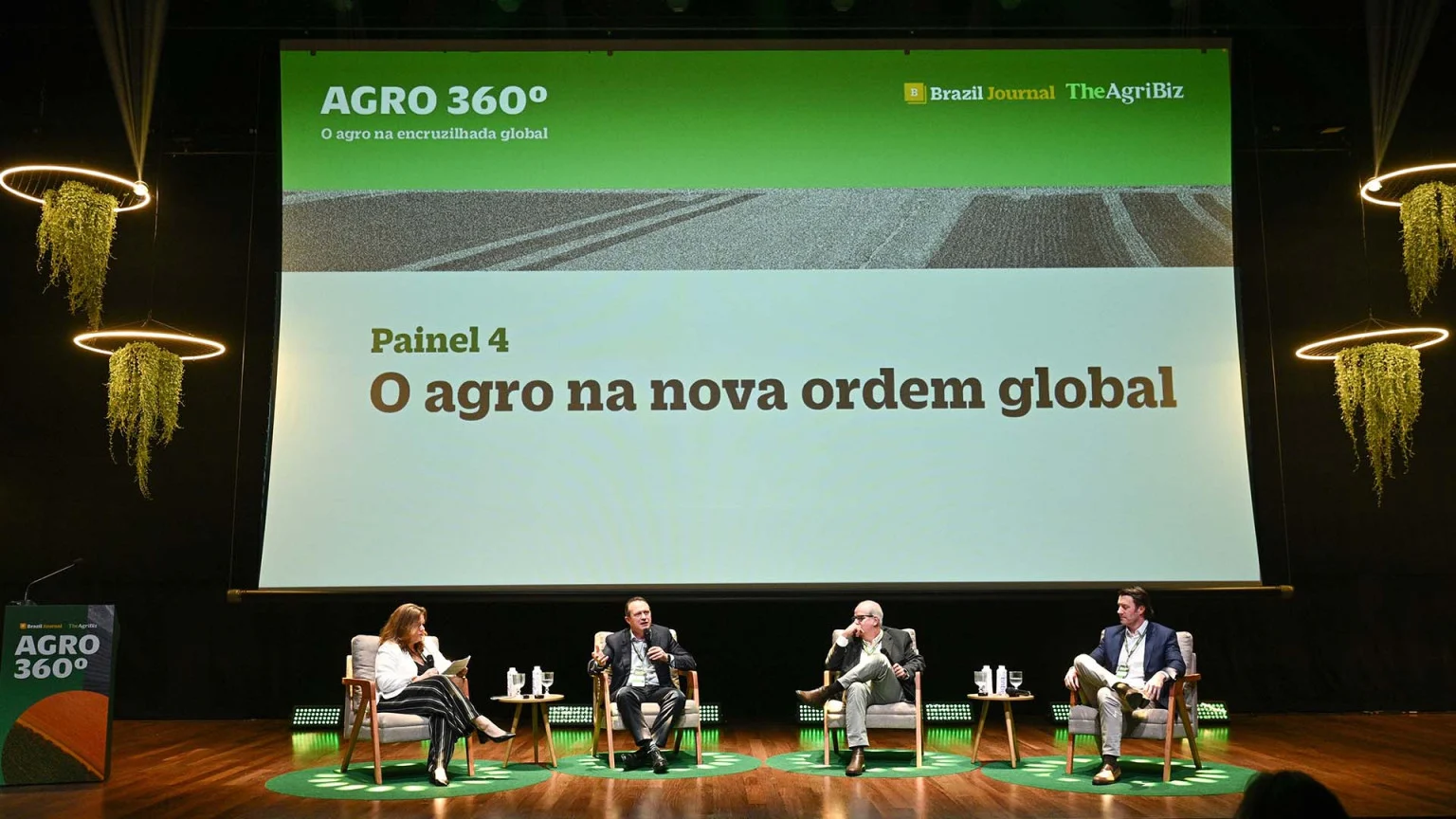
Tomazoni spoke on Tuesday at AGRO 360º, an event organized through a partnership between The AgriBiz and Brazil Journal. The panel, which discussed how the new global order is affecting agribusiness, also included Eduardo Monteiro, Mosaic’s country manager for Brazil and Paraguay, and Altamir Perottoni Júnior, commercial vice-president at Rumo, the country’s main railway operator.
In Tomazoni’s view, the trade and geopolitical shocks of recent years, from tariffs imposed by the United States to supply-chain disruptions caused by the Covid-19 pandemic and the wars in Ukraine and Iran, have put food security under threat in several countries.
In that environment, it is natural for major food buyers to create barriers to Brazilian meat, as in the case of the European Union. Others may set quotas to protect their own industries and prioritize expanding local production, as China did by imposing safeguards on beef imports.
“This is an issue that is spreading across the world. With geopolitical instability, you never know when a supply chain will break. Seeing countries try to protect themselves is something we have to live with,” Tomazoni said.
According to the executive, the “new normal” also brings opportunities. In many cases, these countries will need operators for the food-security investments they are planning or already making. That calls for a new supplier-partner model, rather than the old strategy of replacing the local market.
That was the case, he said, with JBS’s recent $150 million investment in a partnership with Oman’s sovereign wealth fund to build two plants producing poultry, beef and lamb.
“We have to look for other markets where Brazil can place its production. And we are the potential partner for every country that wants to protect itself, because we have volume, scale and competitive production costs, and we can help with the energy and climate transition because we produce three crops a year.”
“We need to start translating food security as Brazil,” said Monteiro, of Mosaic. “Brazil is relevant to the world today. This is an agenda we have to carry, taking our flag abroad,” whether through the government or the private sector, he said.
For the country’s main railway operator, geopolitics is also shaping infrastructure investment in Brazil, where foreign companies want to be present to secure food supplies.
“Especially at this moment of volatility, having efficient and competitive logistics capacity is essential for positioning,” Perottoni said, citing Chinese trader Cofco, which last year opened its terminal at the Port of Santos and signed a contract with Rumo to operate its railcars and locomotives, securing transport capacity.
“I have also seen other trading companies that did not operate in Brazil looking for ways to originate grains here to try to guarantee their supply,” he said.
Diversification Is Essential
According to JBS’s global CEO, the company’s geographic diversification strategy, with production in more than 20 countries and sales to more than 130, helps reduce the impact of disruptions.
“When facing logistics difficulties, if you are producing in several countries, you can work around them and keep operating. Diversification is not just for now. We have to keep strengthening it to build resilience.”
Monteiro also defended diversification as a form of protection against international shocks, though in his business it comes with particular demands.
“More recently, we have been concerned with finding the inputs we need. Diversification is important for us with the long term in mind,” he said.
According to Monteiro, the fertilizer industry is facing two parallel forces: conflicts in Ukraine and the Middle East affecting exports of raw materials such as sulfur and urea, and the shift in the energy matrix, with sulfur in high demand for electric-vehicle battery production.
“The exponential growth of electrification and the construction of data centers are adding more tension to the market. You have to know how to navigate it, because the duration, especially of the war, is not under our control.”
He said Brazilian farmers’ fertilizer purchases are currently about 7 million tons below the volume bought by the same time last year. In 2025, fertilizer deliveries totaled 49 million tons, a record.
“Will there be a shortage of fertilizers because of the war, or could a potential reduction in demand become a point of balance? We don’t know. There is a significant delay among those who postponed purchases, and they still have the option to buy until September for the summer crop.”
In that context, product shortages are possible. “With farmers postponing decisions, we begin to question our ability to supply them. It is important to inform clients of the risks and carefully calibrate the industrial base to meet demand, which will be very concentrated.”
The situation has also put pressure on logistics. According to Perottoni, Rumo is preparing to handle a potentially larger-than-usual flow of fertilizer negotiations in the second half. “A volume should come that will put pressure on some corridors, and we need to be well prepared.”
This story was translated with the assistance of artificial intelligence.


