


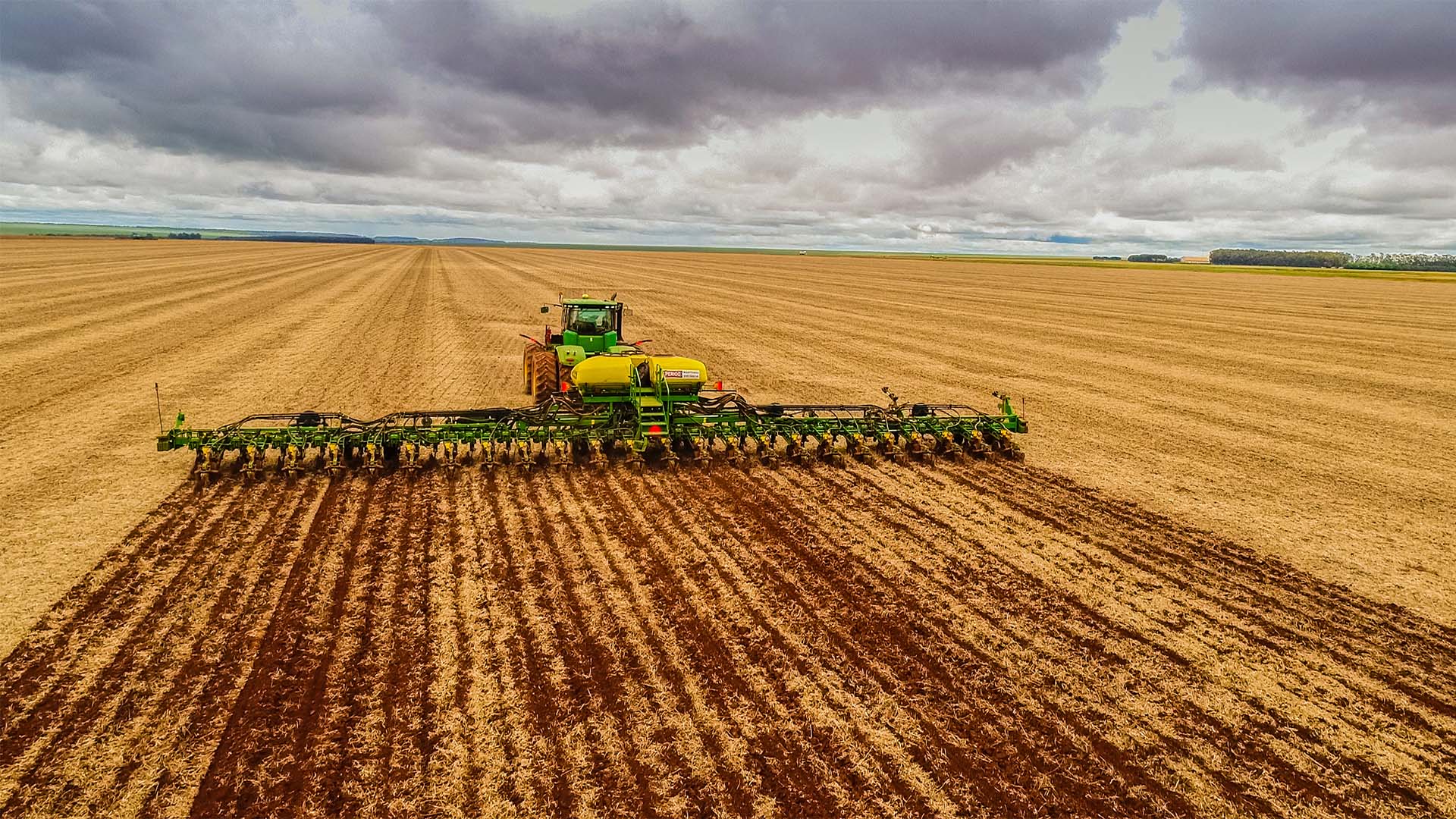

Soybean acreage in Brazil, the world’s largest producer and exporter of the oilseed, is set to grow at its slowest pace in 20 years, confirming a trend private crop forecasters have been signaling for months, according to estimates released Thursday by Conab, Brazil’s food supply agency.
Farmers in the world’s largest soybean producer and exporter are expected to plant 49.3 million hectares (121.8 million acres) in the 2026/27 season, up just 1.4% from the previous crop. That would mark the weakest expansion since 2006/07, when planted area contracted by 9%, according to Conab’s historical data.
Despite the slowdown in acreage growth, soybean production is forecast to reach a record 181.6 million metric tons, a 0.7% increase from the previous season.
The projected gain is supported by acreage expansion in Brazil’s northern and northeastern regions, particularly in Rondônia, Tocantins, Piauí and Maranhão — states that could also be among the hardest hit by a potential super El Niño weather event.
In the Center-West, Brazil’s main grain-producing region, Conab expects soybean acreage to remain broadly unchanged.
“Caution in investment decisions and uncertainty surrounding El Niño are limiting further expansion,” the agency said in its first forecast for the 2026/27 season.
A Repeat of 2006?
The last time Brazil’s soybean acreage contracted, in the 2006/07 season, farmers faced conditions strikingly similar to today’s.
Profitability had deteriorated after two years of losses caused by adverse weather and Asian soybean rust, a fungal disease that can severely damage yields.
International soybean prices were also weak, while rising input and transportation costs squeezed margins. A stronger Brazilian real against the US dollar further reduced farmers’ revenues in local-currency terms.
The combination left many growers heavily indebted. Banks became more selective in extending credit, and even a government-backed debt restructuring program failed to ease financing constraints for many producers, contributing to the decline in planted area.
This time, however, Brazil’s soybean industry has so far managed to avoid an outright contraction. Better-capitalized farming groups are taking over acreage from producers facing greater financial difficulties.
If history offers any guidance, the slowdown could precede a recovery.
International soybean prices began rising in 2007, paving the way for improving farm margins that became more firmly established the following year.
In 2007/08, Brazil’s soybean acreage resumed growth, expanding 3% and beginning a prolonged period of expansion.
Since then, annual acreage growth has ranged from a low of 2% to a peak of 11% in 2012/13. During the most recent boom, between 2020 and 2023, annual expansion rates ranged from 5% to 7%.
Corn and Cotton
Strong demand from Brazil’s corn ethanol industry is encouraging farmers to increase first-crop corn plantings.
Conab expects first-crop corn acreage to rise 11% to 4.5 million hectares (11.1 million acres), with expansion concentrated in Mato Grosso, Mato Grosso do Sul, Tocantins, Goiás and Paraná.
For safrinha corn, the second crop planted on the same land after the soybean harvest, the agency forecasts a 3.7% increase in acreage to 18.5 million hectares (45.7 million acres).
That estimate, however, is based on statistical models and is likely to be revised as the second-crop planting window approaches.
Cotton acreage is also expected to increase, with Conab projecting a 3.7% expansion to 2.09 million hectares (5.2 million acres).
According to the agency, cotton’s relative profitability compared with competing crops such as soybeans and corn is encouraging farmers to shift acreage toward the higher-value commodity, particularly as El Niño raises weather-related risks.
SLC Agrícola, one of Brazil’s largest listed farming companies, announced last week that it plans to expand cotton acreage by 12%, supported by an increase in its irrigated farmland.
Despite the larger planted area, Brazil’s cotton lint production is forecast to remain virtually unchanged at 4.16 million metric tons, as Conab expects yields to decline.
Total corn production, meanwhile, is projected to reach 148 million metric tons, up 5% from the previous season.
This story was translated from the original Portuguese with the assistance of artificial intelligence and reviewed by The AgriBiz editorial staff.


